The international mission that attended the trial of four police officers over the 1 October events in Catalonia publishes its preliminary observations
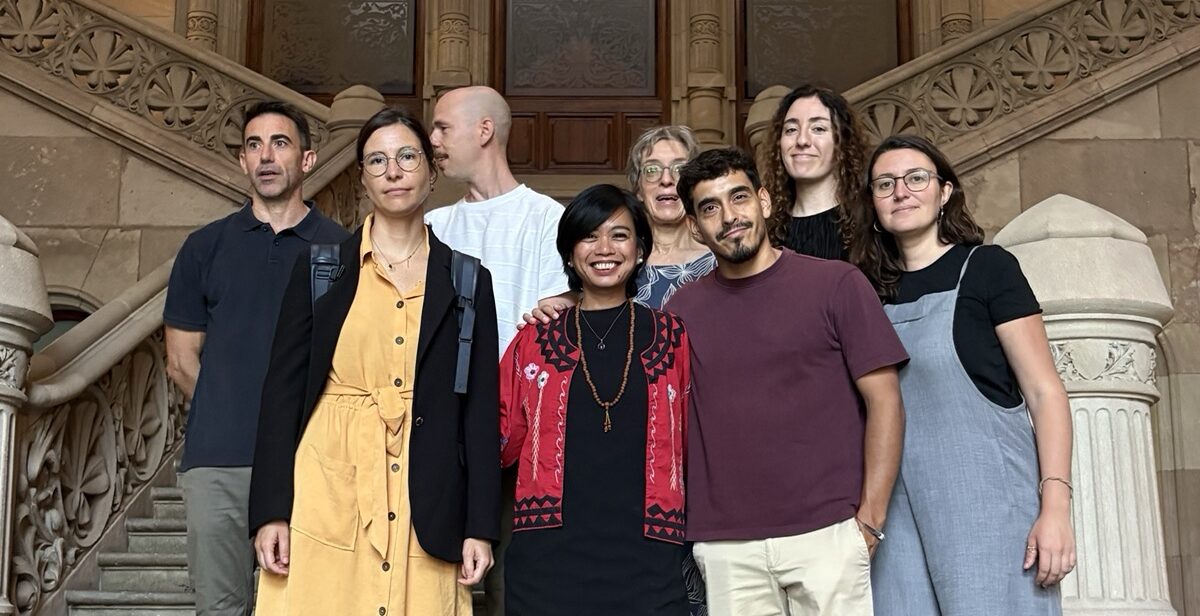
- Representatives of Amnesty International, the World Organisation Against Torture (OMCT), International Network of Civil Liberties Organizations (INCLO), REDRESS, ICHRP–Spain and Defender a quien Defiende (DqD) formed the mission and attended the trial held at the Barcelona Provincial Court as independent observers.
- The Public Prosecutor’s Office has sought to justify the actions of the four police officers and has not played an active role in investigating the alleged excessive use of force against Roger Español. It is also concerning that the prosecution has questioned the applicability of international standards on the use of police force and the prohibition of torture, which are binding on Spain.
- Roger Español, who lost his right eye, has not been treated as a victim by the relevant State authorities and has not received the support, assistance, care and reparation provided for under the Victims’ Statute Act (Law 4/2015).
- Statements by police ballistic experts and the officers themselves have confirmed that rubber bullets are imprecise weapons and that their use is inherently unpredictable, posing a risk of causing serious injuries to protesters and affecting the exercise of the rights to peaceful assembly and freedom of expression.
STATEMENT OF THE OBSERVATION MISSION
As members of an international human rights observation mission, on 16, 17, 30 September, and 1 and 2 October 2026, we have attended the trial of four officers of the Spanish National Police, accused of aggravated bodily injury and torture, in connection with the use of rubber bullets that resulted in Roger Español losing an eye during the social mobilisation surrounding the independence referendum of 1 October 2017.
Without prejudice to our findings following the issuance of the judgment, we wish to make the following preliminary observations regarding the conduct and content of the trial.
1. Fair trial rights: During the trial observation, the Mission noted that basic safeguards for the rights of the accused were observed in accordance with international standards, including the right to legal representation, presence at trial, examination of witnesses, presentation of evidence in their defence, and interpretation and translation into Catalan and Spanish, where necessary, to ensure that they understood the proceedings.
2. Publicity and transparency: The Mission recalls that the publicity and visibility of judicial proceedings are fundamental safeguards under international human rights standards, contributing to transparency, accountability and public confidence in the administration of justice. These principles are essential not only for the general public but also for all parties involved, including the accused and the victim. Effective public access requires not only the ability to hear and understand the proceedings but also to observe the conduct and interactions of judges, the prosecution and the parties involved.
The Mission welcomes that it was permitted to observe the trial from the courtroom and provided with designated seating. However, the courtroom acoustics were inadequate to follow the proceedings clearly, particularly during the first part of the trial, and remained unsatisfactory during the second part. The Mission notes with concern that it was denied access, without explanation, to the online streaming link made available to journalists, which could have significantly improved the clarity and accessibility of the proceedings.
3. The responsibility of the Public Prosecutor in cases of torture and ill-treatment: The Mission now turns to the importance of ensuring an effective investigation and safeguarding the well-being and rights of the victim. Under Articles 12 and 13 of the UN Convention against Torture, as well as relevant Spanish law, the Public Prosecutor has a particular responsibility to ensure that allegations of torture and ill-treatment are promptly, impartially and effectively investigated, while protecting the alleged victim from further harm and ensuring dignified treatment throughout the proceedings.
In this context, the Mission observes with concern that the Public Prosecutor’s Office has not played an active role in investigating the alleged excessive use of force suffered by Roger Español, either during the investigation stage or during the trial. Instead, the Mission has observed that, throughout the trial, the Public Prosecutor’s line of questioning and submissions has sought to justify the actions of the four police officers, rather than seeking to establish the factual truth in this case and protect the public interest.
Such an approach seems difficult to reconcile with the particular responsibility of the prosecutorial authorities to ensure that allegations of torture or ill-treatment are subject to a prompt, impartial and effective examination, as well as with their broader statutory mandate, under Article 1 of the Organic Statute of the Public Prosecutor’s Office, to safeguard citizens’ rights, uphold legality and protect the public interest.
4. Lack of safeguards and victim-centred approach: In addition, the Mission further observes that the victim in this case, who lost his right eye, has not been treated as a victim by the relevant State authorities nor provided with the support, assistance, care and reparation envisaged under Articles 3, 10 and 19 of Spain’s Statute on the Victim of Crime (Law 4/2015). These safeguards are especially pertinent where the alleged offences concern torture or ill-treatment. Yet they have not been observed in the proceedings to date.
We observe that the victim in this case chose to attend the trial proceedings and has chosen to play an active role throughout the proceedings notwithstanding the lack of institutional support.
5. The applicability of international human rights standards in Spain: The Mission notes with concern that, during the proceedings, the Public Prosecutor appeared to question the applicability of international standards governing the use of force by law enforcement officials during protests, including standards concerning less-lethal weapons. Spain is bound by international human rights treaties prohibiting torture and cruel, inhuman or degrading treatment or punishment, and these obligations must be interpreted and applied in light of relevant international human rights standards and guidance, including United Nations standards on the use of force and less-lethal weapons. The absolute prohibition of torture, which has the status of jus cogens, entails the procedural obligation by the State to conduct a prompt, thorough, and independent official investigation whenever there is a credible or arguable claim, as well as to ensure that no act of torture or ill-treatment is subject to amnesty or pardon.
6. International standards on the use of force: International standards require that any use of force by law enforcement be lawful, necessary, proportionate and precautionary, and directed only against persons presenting a specific and legitimate threat. International courts and human rights experts have further recognised that excessive or disproportionate use of force during protests may amount to torture or other ill-treatment. The recent UN Protocol recalls that unlawful use of force during assemblies may violate the absolute and non-derogable prohibition of torture and other ill-treatment, and that this prohibition applies at all times, “even when a protest is considered to be no longer peaceful”.
The Mission notes with concern statements made by police ballistics experts and the accused themselves indicating that the rubber bullets used during the protests in question were “unpredictable”. Expert testimony in this trial also highlighted the high, potentially lethal kinetic energies of these rubber bullets. The UN Guidance on Less-Lethal Weapons states: “Kinetic impact projectiles must be tested and authorized to ensure that they are sufficiently accurate to strike a safe area on a human-sized target from the required distance, and without excessive energy, which could cause injury.” It expressly states that skip-firing from the ground creates an unacceptable risk of serious injury.
7. The lasting human and social costs of ocular violence: The Mission considers particularly striking the expert evidence examined at trial — which was not disputed by any of the parties — demonstrating how ocular violence can cause lifelong physical and psychological consequences, affecting survivors’ health, mobility, independence and emotional wellbeing. Beyond physical and mental health impacts, it disrupts a person’s life plans abruptly, creating difficulties in family relationships, social reintegration and returning to work. At the societal level, ocular violence generates fear and discourages public participation, which has serious consequences for democracy and the right to protest. Survivors may additionally experience isolation, stigma and inadequate or prejudiced treatment, with the effects extending beyond the individual to their families and wider social lives.
8. The obligation to facilitate the right to freedom of peaceful assembly: The Mission also considers it important to place the use of force within the broader context of the right to freedom of peaceful assembly. This right is fundamental to a democratic society and protects collective expression, including assemblies that are contentious or cause a certain degree of disruption. States have the obligation to facilitate the exercise of the right and to protect participants.
As noted by the UN Special Rapporteur on the rights to freedom of peaceful assembly and of association, stigmatising narratives targeting assemblies can violate numerous fundamental human rights, including the right to freedom of peaceful assembly. Throughout the trial, the Mission observed the characterisation of conduct consistent with non-violent civil disobedience as “hostile” or “violent” and the repeated description of citizens exercising their fundamental right to protest as a “mass” or a “hostile mass”. When such narratives are promoted by State officials, there is a risk that force is employed not to address a specific and imminent threat, but to punish, intimidate or deter the exercise of the right itself.
The Mission will continue to closely monitor developments in this case, including the forthcoming judgment.