Irídia denounces widespread judicial obstruction in Pegasus spyware investigations due to failure to execute European Investigation Orders
- Lack of response from Spanish courts prevents Luxembourg from executing key European orders to investigate NSO Group and the use of Pegasus
Barcelona, March 25 — This Wednesday, Irídia has denounced the obstruction of several judicial investigations related to Pegasus spyware due to the failure to execute European Investigation Orders (EIOs), a key mechanism to investigate companies within the NSO Group and their executives, based in Luxembourg.
Four years after the investigations began and six years after the events, several cases remain stalled due to serious judicial obstacles that prevent a thorough and effective investigation. According to the organisation, this inaction — described as widespread and very serious — is leading to the closure or paralysis of key lines of investigation needed to access documentation, take witness statements and clarify responsibilities. In some cases, individuals under investigation have still not been formally notified of their status within Spanish criminal proceedings.
In this context, Irídia has presented judicial communications from Luxembourg evidencing repeated lack of response from Barcelona’s Investigative Court No. 24. According to these communications, Luxembourg authorities requested responses to judicial cooperation requests on more than four occasions — up to six in some cases — and warned that, in the absence of a reply within the established deadlines, the proceedings would be closed without execution. The European Investigation Order was subsequently confirmed as closed and referred to the Public Prosecutor’s Office due to the lack of response from the Spanish judicial authority.
Additionally, during the press conference, Irídia denounced that in one case the order was only sent to Luxembourg two years after it had been requested, further illustrating the delays that characterise these proceedings.
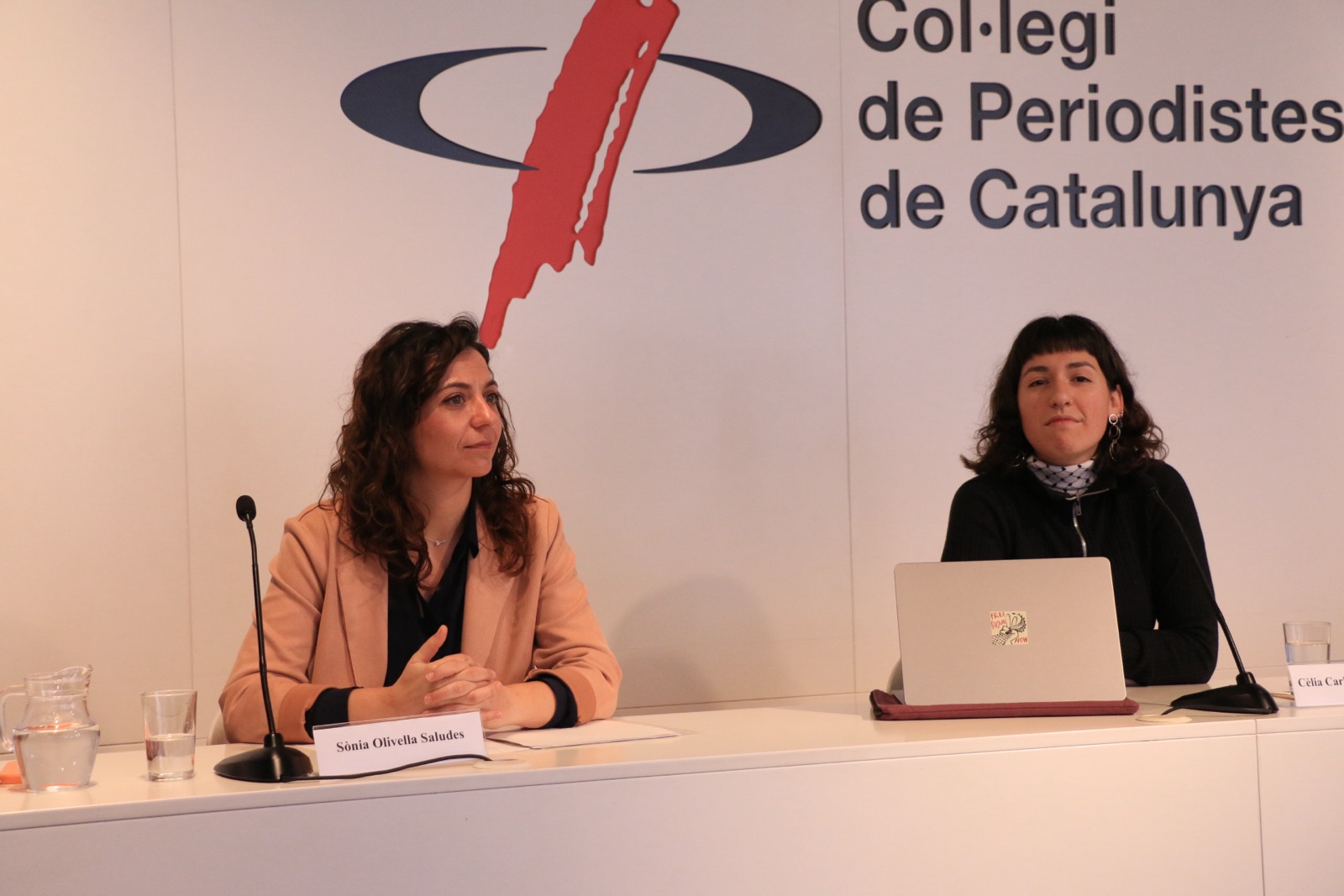
Irídia’s litigation coordinator, Sònia Olivella Saludes, stressed that European Investigation Orders are essential to advance Pegasus-related cases, as they are the only mechanism to investigate companies such as NSO Group and obtain key information to clarify the facts and establish accountability.
According to Olivella, this mechanism is being seriously obstructed in Spain. She identified three recurring patterns across the different cases, which are fragmented across several investigative courts in Barcelona: cases closed without processing EIOs, orders agreed but stalled for months or years, and cases in which EIOs fail due to errors or lack of response from Spanish courts to Luxembourg’s requests.
This situation, she warned, prevents an effective investigation and violates victims’ right to effective judicial protection.
For her part, Irídia’s Pegasus specialist, Cèlia Carbonell Cassanyes, placed the case in a global context and warned that the use of this spyware is part of an international dynamic marked by the privatization of security and a securitarian narrative that prioritizes economic competitiveness over fundamental rights. She pointed out that while investigations remain blocked in Spain, countries such as Poland and Greece have made progress in investigation and accountability, highlighting a lack of political will in the Spanish case.
Irídia has warned that the lack of investigation not only prevents clarification of past events but also hinders understanding of the current scope of these practices. The organisation calls for the effective use of existing mechanisms to determine responsibilities and ensure that such serious violations of fundamental rights are not repeated.